
FAQ
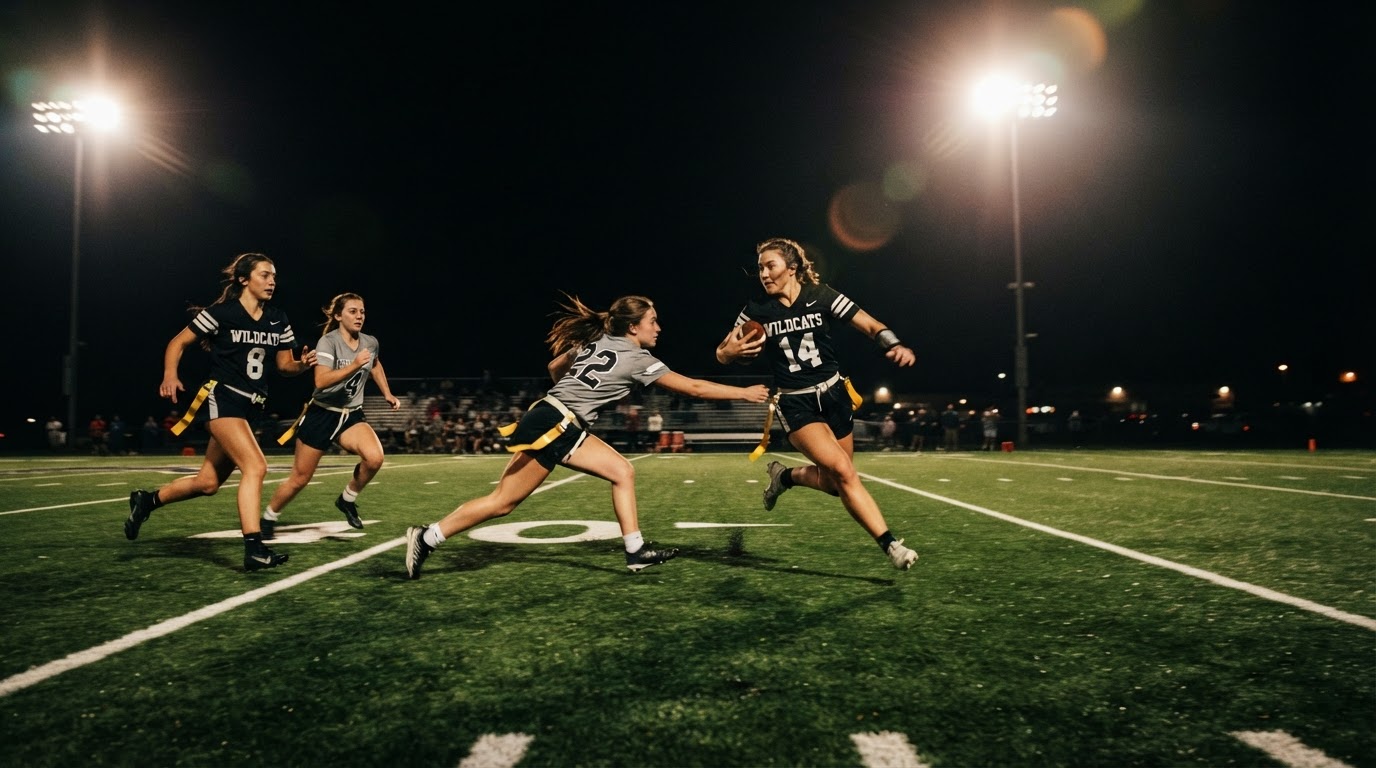
Flag football is a fast, non-tackle version of American football. Instead of tackling, defenders stop the ball carrier by pulling a flag from their belt. It's played 5-on-5 on a smaller field, so every player is involved in every play.
No. Tackling, blocking and diving at players are not allowed. That makes it safe and accessible for all ages, genders and fitness levels, with no pads or helmets needed.
Teams have four downs to move the ball past midfield, then four more to score a touchdown. There's no kicking: after a touchdown, teams attempt a one or two-point conversion from close range. Games are usually two halves of around 20 minutes.
Yes. Flag football will make its Olympic debut at the LA 2028 Games, with both men's and women's competitions. It's one of the fastest-growing sports in Australia and around the world.
Not at all. Many players come from rugby, touch, AFL, soccer or basketball, and plenty have never played a team sport. Social leagues and come-and-try clinics are the best place to learn the rules as you go.
Comfortable sportswear, water and boots or runners suited to grass. Most competitions supply flag belts, and a mouthguard is recommended. Metal studs are not allowed.
All Flag Football Australia leagues, tournaments, clinics and tryouts are registered through NextPlay. Create an account, find a competition near you and sign up as an individual or a team.
Yes. Many competitions accept individual registrations and place free agents into teams. Look for the individual option when registering on NextPlay.
Follow Flag Football Australia on Instagram, Facebook and YouTube for club news, upcoming events and competitions in each state. You'll find the links at the bottom of our home page.
Yes. Flag football is played by juniors, women's, men's and mixed teams. Available divisions vary by location, so check the competitions listed on NextPlay for your area.